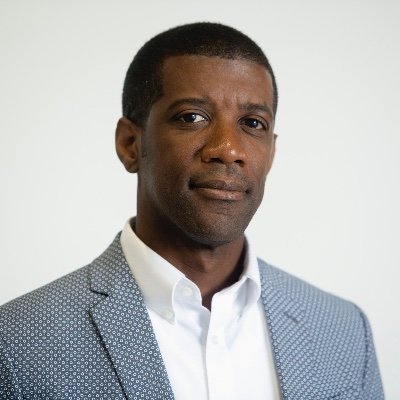
Jarvis DeBerry: The Pulitzer-Winning Voice Who Chronicled New Orleans Through Katrina and Beyond
Jarvis DeBerry spent more than two decades as one of New Orleans’ most trusted journalistic voices, building a career that culminated in a Pulitzer Prize for Public Service and a column that became, for two straight decades, one of the city’s most honest mirrors. Since leaving daily newspapering, he has continued that work across multiple newsrooms, most recently taking on an opinions editor role at a major national outlet.
Early Life in Mississippi
Jarvis DeBerry is a native of Holly Springs, Mississippi, a small town in the northern part of the state. He has written about his family’s roots in the region directly in his own commentary, noting that he was born the child, grandchild, and great-grandchild of Mississippians who stayed in the state even as an estimated six million Black Americans left the South between 1910 and 1970 during the Great Migration. He’s described feeling defensive of Mississippi and the South growing up, pushing back against outside suggestions that those who stayed lacked the sense to leave — a perspective that has informed much of his later writing on race, place, and identity in the Deep South.
Twenty-Two Years at The Times-Picayune
DeBerry joined The Times-Picayune newspaper in New Orleans in 1997, beginning his career there as a crime and courts reporter, covering the day-to-day workings of the city’s judicial system. Over the course of 22 years at the paper, and later its digital counterpart, NOLA.com, he moved through a series of increasingly prominent roles: from reporter to editorial writer, to columnist, and eventually to deputy opinions editor.
Starting in 1999, DeBerry’s column became a fixture of New Orleans public life for the next two decades. According to those who worked with him, the column regularly inspired letters to the editor, water cooler conversations, city council debate, and barbershop discussion across the city — the kind of direct civic impact few local columnists achieve. Dean Baquet, the New Orleans-born former executive editor of The New York Times, has described DeBerry as one of the finest truth-tellers the city has produced.
Covering Hurricane Katrina and Winning the Pulitzer
The defining professional achievement of DeBerry’s career at The Times-Picayune came in 2006, when he was part of the newspaper’s reporting team awarded the Pulitzer Prize for Public Service for its coverage of Hurricane Katrina and the catastrophic flooding that followed. The Times-Picayune’s Katrina coverage is widely regarded as some of the most important American journalism of the 21st century, produced under conditions where much of the newsroom itself was displaced by the storm, and DeBerry’s contribution to that award-winning body of work remains the signature credit of his career.
A Decade of Column-Writing Awards
Beyond the shared Pulitzer, DeBerry built an extensive individual awards record for his column writing over the years. He won first prize for column writing in the Louisiana/Mississippi Associated Press Managing Editors Association’s annual contest five separate times, in 2007, 2011, 2013, 2015, and 2019 — a level of sustained recognition that reflects consistency across more than a decade rather than a single strong year. He also received the National Association of Black Journalists’ Salute to Excellence Award in commentary in both 2016 and 2019, the New Orleans Press Club’s best column prize in 2019, and awards from the Louisiana Bar Association for best trial coverage, reflecting the legal-reporting background he built early in his career.
“I Feel To Believe”
In September 2020, the University of New Orleans Press published a collection of DeBerry’s Times-Picayune columns under the title “I Feel To Believe.” The book compiles two decades of his writing, documenting what UNO Press editor-in-chief Abram Himelstein described as a story of constancy and upheaval, loss, racial injustice, and class strife in New Orleans from the late 1990s through the mid-2010s. The collection captures the city both before and after Katrina, offering what reviewers have called a first-hand, boldly rendered account of a rapidly changing New Orleans, written by someone who — despite arriving from Mississippi rather than being a lifelong native — earned a reputation as one of the city’s sharpest observers.
Life After The Times-Picayune
DeBerry left The Times-Picayune in 2019 after 22 years, going on to write as a columnist for Cleveland.com and other regional outlets. He was part of the original cohort of the Robert Wood Johnson Foundation’s Culture of Health Leaders program, a fellowship focused on health equity leadership. He has also worked in collaboration with members of the Institute of Women and Ethnic Studies leadership team on efforts to raise awareness about the prevalence of trauma among New Orleans youth, extending his public-interest work beyond traditional column writing into direct community and policy engagement.
DeBerry went on to serve as editor of the Louisiana Illuminator, a nonprofit news outlet covering Louisiana state government and policy as part of the States Newsroom network, which also includes sister publications such as Michigan Advance and Georgia Recorder, where his commentary has also appeared. He has since moved into a national role as opinions editor for MS NOW, continuing his opinion journalism career at a broader scale after decades of writing primarily about Louisiana and Mississippi.
Continued Recognition
DeBerry’s standing within journalism and academic circles has continued into 2026. He was selected to deliver the University of Southern Mississippi’s 2026 Armstrong-Branch Distinguished Lecture, a speaker series established in 1993 to honor Gwendolyn Armstrong-Chamberlain and Raylawni Adams Branch, the university’s first African American students. The invitation reflects DeBerry’s continued standing as a significant voice on race, journalism, and the American South, more than two decades after he began his career at The Times-Picayune.
Quick Facts
| Category | Detail |
|---|---|
| Name | Jarvis DeBerry |
| Born/raised | Holly Springs, Mississippi |
| Based in | Baton Rouge, Louisiana |
| Career | The Times-Picayune / NOLA.com (1997–2019); Louisiana Illuminator (editor); MS NOW (opinions editor) |
| Major honor | 2006 Pulitzer Prize for Public Service (Hurricane Katrina coverage) |
| Book | “I Feel To Believe” (University of New Orleans Press, 2020) |
FAQ
Did Jarvis DeBerry win a Pulitzer Prize?
Yes — he was part of The Times-Picayune’s reporting team awarded the 2006 Pulitzer Prize for Public Service for its coverage of Hurricane Katrina and its aftermath.
What is “I Feel To Believe”?
It’s a 2020 book collecting two decades of DeBerry’s Times-Picayune columns, published by the University of New Orleans Press.
Where does Jarvis DeBerry work now?
He currently serves as opinions editor for MS NOW, after previously serving as editor of the Louisiana Illuminator.
How long did Jarvis DeBerry work at The Times-Picayune?
He worked there for 22 years, from 1997 to 2019, starting as a crime and courts reporter before becoming a columnist and deputy opinions editor.
A Career Defined by Consistency and Conviction
From a Mississippi childhood shaped by family roots that stayed put through the Great Migration to 22 years chronicling New Orleans through its most devastating modern crisis, Jarvis DeBerry’s career has been built on a consistent willingness to tell hard truths about the places he’s covered. A Pulitzer, five column-writing awards over more than a decade, and a continued national platform suggest that willingness hasn’t faded with time — it’s simply found new outlets.